Sale

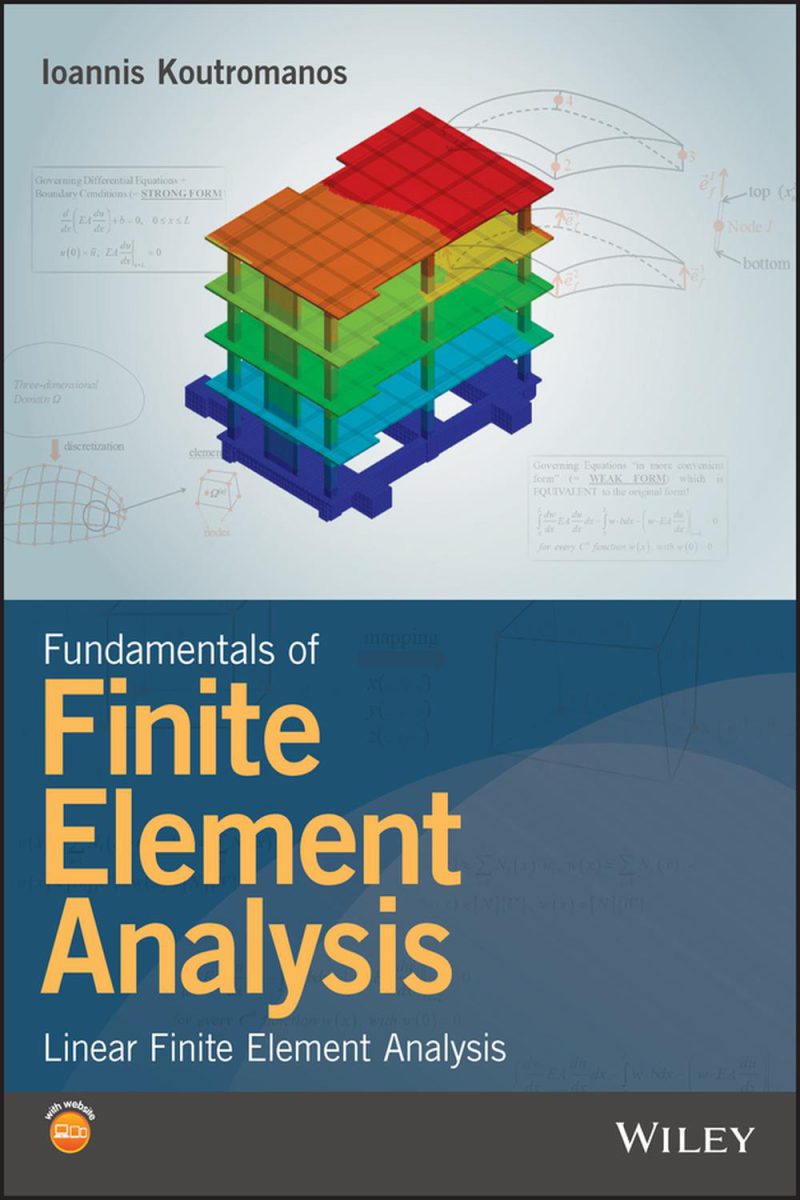
دانلود کتاب اصول تحلیل المان محدود: تحلیل المان محدود خطی ۲۰۱۷ (Fundamentals of Finite Element Analysis: Linear Finite Element Analysis 2017) با لینک مستقیم و فرمت pdf (پی دی اف)
| نویسنده |
Ioannis Koutromanos |
|---|

۳۰ هزار تومان تخفیف با کد «OFF30» برای اولین خرید
| سال انتشار |
2017 |
|---|---|
| زبان |
English |
| نوع فایل |
|
| حجم |
8 Mb |
🏷️ 200,000 تومان قیمت اصلی: 200,000 تومان بود.129,000 تومانقیمت فعلی: 129,000 تومان.
🏷️
378,000 تومان
قیمت اصلی: ۳۷۸٬۰۰۰ تومان بود.
298,000 تومان
قیمت فعلی: ۲۹۸٬۰۰۰ تومان.
کتاب درسی مقدماتی که اصول تحلیل المان محدود خطی (FEA) را پوشش می دهد.
این کتاب اولین جلد از مجموعه ای دو جلدی است که خوانندگان را با مبانی نظری و پیاده سازی روش المان محدود (FEM) آشنا می کند. جلد اول روی استفاده از این روش برای مسائل خطی تمرکز می کند. روشی کلی برای تحلیل المان محدود (FEA) یک مسئله فیزیکی ارائه می شود که هدف آن مشخص کردن مقادیر تابع میدان است. ابتدا فرم قوی مسئله (معادلات دیفرانسیل حاکم و شرایط مرزی) تدوین می شود. در ادامه، فرم ضعیف معادلات حاکم ایجاد می شود. در نهایت، یک تقریب المان محدود معرفی می شود که فرم ضعیف را به سیستمی از معادلات تبدیل می کند که در آن تنها مقادیر گرهی تابع میدان ناشناخته هستند. این روش برای الاستیسیته و هدایت حرارتی یک بعدی، مسائل میدان مقیاس چند بعدی در حالت پایدار (هدایت حرارتی، انتشار شیمیایی، جریان در محیط متخلخل)، الاستیسیته چند بعدی و مکانیک سازه (تیرها/پوسته ها)، و همچنین مسائل میدان مقیاس وابسته به زمان (پویا)، دینامیک الاستیک و دینامیک سازه به کار گرفته می شود. مفاهیم مهم برای محاسبات المان محدود مانند المان های ایزوپارامتریک برای تحلیل چند بعدی و انتگرال گیری گاوسی برای ارزیابی عددی انتگرال ها، ارائه و توضیح داده می شوند. جنبه های عملی FEA و مباحث پیشرفته مانند روش های انتگرال گیری کاهش یافته، المان های محدود ترکیبی و تایید و اعتبارسنجی FEM نیز مورد بحث قرار می گیرند.
اصول تحلیل المان محدود: تحلیل المان محدود خطی یک متن ایده آل برای دانشجویان کارشناسی و کارشناسی ارشد رشته های عمران، هوافضا و مکانیک، فروشندگان نرم افزار المان محدود، و همچنین مهندسان عملی و هر کسی که به تحلیل المان محدود خطی علاقه مند است.
۱. جلد
۲. صفحه عنوان
۳. فهرست مطالب
۴. پیشگفتار
۵. درباره وبسایت همراه
۱ مقدمه
۲. فرم قوی و ضعیف برای مسائل یکبعدی
۳. فرمولبندی المان محدود برای مسائل یکبعدی
۴. مسائل چندبعدی: مقدمات ریاضیاتی
۵. هدایت حرارتی دوبعدی و سایر مسائل میدان اسکالر
۶. فرمولبندی المان محدود برای مسائل میدان اسکالر دوبعدی
۷. الاستیسیته چندبعدی
۸. فرمولبندی المان محدود برای الاستیسیته دوبعدی
۹. فرمولبندی المان محدود برای الاستیسیته سهبعدی
۱۰. مباحثی در تحلیل المان محدود کاربردی
۱۱. همگرایی تحلیل المان محدود چندبعدی، پدیده قفلشدگی در جامدات چندبعدی و انتگرالگیری کاهشیافته
۱۲. المانهای محدود چندمیدانی (مخلوط)
۱۳. تحلیل المان محدود تیرها
۱۴. تحلیل المان محدود پوستهها
۱۵. المانهای محدود برای الاستودینامیک، دینامیک سازهای و مسائل میدان اسکالر وابسته به زمان
۱۶. تحلیل مسائل میدان اسکالر وابسته به زمان (سهموی)
۱۷. روشهای حل برای الاستودینامیک و دینامیک سازهای
۱۸. تصدیق و اعتبارسنجی برای روش المان محدود
۱۹. حل عددی سیستمهای معادلات خطی
۲۵. ضمیمه الف: مروری مختصر بر جبر برداری و ماتریسی
۲۶. ضمیمه ب: مروری بر تحلیل ماتریسی برای سیستمهای گسسته
۲۷. ضمیمه پ: حداقل انرژی پتانسیل برای الاستیسیته – اصول واریایونی
۲۸. ضمیمه ت: محاسبه تغییر مکان و تبدیل نیروها برای اتصالات جسم صلب
۲۹. فهرست
۳۰. توافقنامه مجوز استفاده کننده نهایی
An introductory textbook covering the fundamentals of linear finite element analysis (FEA)
This book constitutes the first volume in a two-volume set that introduces readers to the theoretical foundations and the implementation of the finite element method (FEM). The first volume focuses on the use of the method for linear problems. A general procedure is presented for the finite element analysis (FEA) of a physical problem, where the goal is to specify the values of a field function. First, the strong form of the problem (governing differential equations and boundary conditions) is formulated. Subsequently, a weak form of the governing equations is established. Finally, a finite element approximation is introduced, transforming the weak form into a system of equations where the only unknowns are nodal values of the field function. The procedure is applied to one-dimensional elasticity and heat conduction, multi-dimensional steady-state scalar field problems (heat conduction, chemical diffusion, flow in porous media), multi-dimensional elasticity and structural mechanics (beams/shells), as well as time-dependent (dynamic) scalar field problems, elastodynamics and structural dynamics. Important concepts for finite element computations, such as isoparametric elements for multi-dimensional analysis and Gaussian quadrature for numerical evaluation of integrals, are presented and explained. Practical aspects of FEA and advanced topics, such as reduced integration procedures, mixed finite elements and verification and validation of the FEM are also discussed.
Fundamentals of Finite Element Analysis: Linear Finite Element Analysis is an ideal text for undergraduate and graduate students in civil, aerospace and mechanical engineering, finite element software vendors, as well as practicing engineers and anybody with an interest in linear finite element analysis.
1. Cover
2. Title Page
3. Table of Contents
4. Preface
5. About the Companion Website
1 Introduction
2 Strong and Weak Form for One‐Dimensional Problems
3 Finite Element Formulation for One‐Dimensional Problems
4 Multidimensional Problems: Mathematical Preliminaries
5 Two‐Dimensional Heat Conduction and Other Scalar Field Problems
6 Finite Element Formulation for Two‐Dimensional Scalar Field Problems
7 Multidimensional Elasticity
8 Finite Element Formulation for Two‐Dimensional Elasticity
9 Finite Element Formulation for Three‐Dimensional Elasticity
10 Topics in Applied Finite Element Analysis
11 Convergence of Multidimensional Finite Element Analysis, Locking Phenomena in Multidimensional Solids and Reduced Integration
12 Multifield (Mixed) Finite Elements
13 Finite Element Analysis of Beams
14 Finite Element Analysis of Shells
15 Finite Elements for Elastodynamics, Structural Dynamics, and Time‐Dependent Scalar Field Problems
16 Analysis of Time‐Dependent Scalar Field (Parabolic) Problems
17 Solution Procedures for Elastodynamics and Structural Dynamics
18 Verification and Validation for the Finite Element Method
19 Numerical Solution of Linear Systems of Equations
25. Appendix A: Concise Review of Vector and Matrix Algebra
26. Appendix B: Review of Matrix Analysis for Discrete Systems
27. Appendix C: Minimum Potential Energy for Elasticity—Variational Principles
28. Appendix D: Calculation of Displacement and Force Transformations for Rigid‐Body Connections
29. Index
30. End User License Agreement
✨ ضمانت تجربه خوب مطالعه
در صورت مشکل، مبلغ پرداختی بازگردانده می شود.
دانلود فایل کتاب با سرعت بالا
دانلود مستقیم به همراه ارسال فایل به ایمیل.
با چت آنلاین و پیامرسان ها پاسخگو هستیم.
کتاب ها را از منابع معتیر انتخاب می کنیم.

 هوشمصنوعی ترجمه کالیبو