Sale
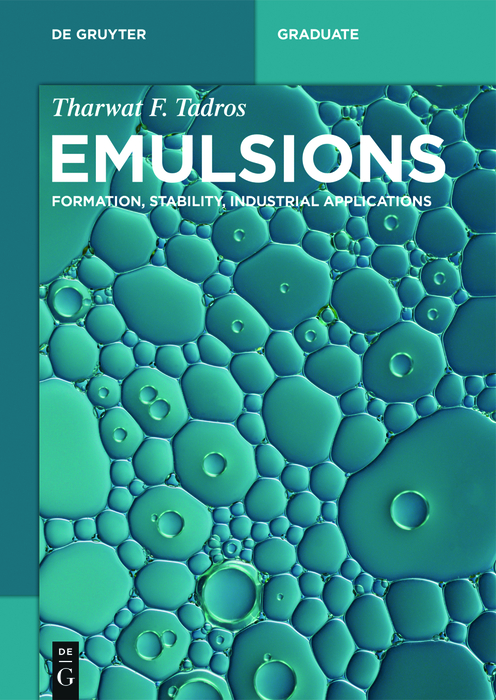
دانلود کتاب امولسیونها: تشکیل، پایداری، کاربردهای صنعتی ۲۰۱۶ (Emulsions: Formation, Stability, Industrial Applications 2016) با لینک مستقیم و فرمت pdf (پی دی اف)
| نویسنده |
Tharwat F. Tadros |
|---|

۳۰ هزار تومان تخفیف با کد «OFF30» برای اولین خرید
| سال انتشار |
2016 |
|---|---|
| زبان |
English |
| تعداد صفحهها |
242 |
| نوع فایل |
epub |
| حجم |
11.7MB |
🏷️ 200,000 تومان قیمت اصلی: 200,000 تومان بود.129,000 تومانقیمت فعلی: 129,000 تومان.
🏷️
378,000 تومان
قیمت اصلی: ۳۷۸٬۰۰۰ تومان بود.
298,000 تومان
قیمت فعلی: ۲۹۸٬۰۰۰ تومان.
فصل ۲ ترمودینامیک تشکیل و تخریب امولسیون
کاربرد قانون دوم ترمودینامیک برای تشکیل امولسیون: موازنه انرژی و آنتروپی و تشکیل غیرخودبهخودی امولسیونها. تخریب امولسیون توسط لختهشدن و پیوستگی در غیاب امولسیفایر. نقش امولسیفایر در جلوگیری از لختهشدن و پیوستگی با ایجاد یک سد انرژی ناشی از انرژیهای دافعه بین قطرات.
فصل ۳ نیروهای برهمکنش بین قطرات امولسیون
جاذبه واندروالسی و وابستگی آن به اندازه قطره، ثابت هاماکر و فاصله جدایی بین قطرات. دافعه الکترواستاتیکی ناشی از حضور لایههای دوتایی الکتریکی و وابستگی آن به پتانسیل سطحی (یا زتا) و غلظت و ظرفیت الکترولیت. ترکیب جاذبه واندروالسی با دافعه لایه دوتایی و نظریه پایداری کلوئید. دافعه استریک ناشی از حضور سورفکتانتها و پلیمرهای غیریونی جذبشده. ترکیب جاذبه واندروالسی با دافعه استریک و نظریه تثبیت استریک.
فصل ۴ جذب سورفکتانتها در فصل مشترک روغن/آب
تجزیه و تحلیل ترمودینامیکی جذب سورفکتانت و ایزوترم جذب گیبس. محاسبه میزان جذب سورفکتانت و مساحت به ازای هر مولکول سورفکتانت در فصل مشترک. تکنیکهای تجربی برای اندازهگیری کشش سطحی بین فازی.
فصل ۵ مکانیسم امولسیونسازی و نقش امولسیفایر
شرح عوامل مسئول تغییر شکل قطره و شکست آن. نقش سورفکتانت در جلوگیری از پیوستگی در طول امولسیونسازی. تعریف الاستیسیته اتساعی گیبس و اثر مارانگونی در جلوگیری از پیوستگی.
فصل ۶ روشهای امولسیونسازی
جریان لوله، مخلوطکنهای استاتیک و همزنهای با سرعت بالا (مخلوطکن روتور-استاتور). جریان آرام و آشفته. امولسیونسازی غشایی. هموژنایزرهای فشار بالا و روشهای اولتراسونیک.
فصل ۷ انتخاب امولسیفایرها
تعادل آبدوستی-چربیدوستی (HLB) و کاربرد آن در انتخاب سورفکتانت. محاسبه اعداد HLB و اثر ماهیت فاز روغن. روش دمای وارونگی فاز (PIT) برای انتخاب امولسیفایر. روش نسبت انرژی پیوستگی برای انتخاب امولسیفایر.
فصل ۸ خامهگیری/رسوبگذاری امولسیونها و جلوگیری از آن
نیروی محرکه برای خامهگیری/رسوبگذاری: اثر گرانش، اندازه قطره و اختلاف چگالی بین روغن و فاز پیوسته. محاسبه سرعت خامهگیری/رسوبگذاری در امولسیونهای رقیق. تأثیر افزایش کسر حجمی فاز پراکنده بر سرعت خامهگیری/رسوبگذاری. کاهش خامهگیری/رسوبگذاری: موازنه چگالی دو فاز، کاهش اندازه قطره و اثر افزودن “غلیظکنندهها”.
فصل ۹ لختهشدن امولسیونها و جلوگیری از آن
عوامل مؤثر بر لختهشدن. محاسبه سرعت لختهشدن سریع و آهسته. تعریف نسبت پایداری و وابستگی آن به غلظت و ظرفیت الکترولیت. تعریف غلظت بحرانی انعقاد و وابستگی آن به ظرفیت الکترولیت. کاهش لختهشدن با افزایش نیروهای دافعه.
فصل ۱۰ رسیدن استوالد و کاهش آن
عوامل مسئول رسیدن استوالد: تفاوت در حلالیت بین قطرات کوچک و بزرگ و معادله کلوین. محاسبه سرعت رسیدن استوالد. کاهش رسیدن استوالد با گنجاندن مقدار کمی روغن بسیار نامحلول. کاهش رسیدن استوالد با استفاده از سورفکتانت پلیمری به شدت جذبشده و افزایش الاستیسیته گیبس.
فصل ۱۱ پیوستگی امولسیون و جلوگیری از آن
نیروی محرکه برای پیوستگی امولسیون: نازک شدن و گسیختگی لایه مایع بین قطرات. مفهوم فشار جداکننده برای جلوگیری از پیوستگی. روشهایی برای کاهش یا حذف پیوستگی: استفاده از فیلمهای سورفکتانت مخلوط، استفاده از فازهای کریستال مایع لایهای و استفاده از سورفکتانتهای پلیمری.
فصل ۱۲ وارونگی فاز و جلوگیری از آن
تمایز بین وارونگی فاز فاجعهبار و گذرا. تأثیر کسر حجمی پراکنده و عدد HLB سورفکتانت. توضیح عوامل مسئول وارونگی فاز.
فصل ۱۳ مشخصهیابی امولسیونها
اندازهگیری توزیع اندازه قطره: میکروسکوپ نوری و تجزیه و تحلیل تصویر. میکروسکوپ کنتراست فاز و پلاریزان. روشهای پراش. میکروسکوپ لیزری کانفوکال. روشهای پراکندگی برگشتی.
فصل ۱۴ کاربرد صنعتی امولسیونها
14.1 کاربرد در داروسازی
14.2 کاربرد در لوازم آرایشی
14.3 کاربرد در مواد شیمیایی کشاورزی
14.4 کاربرد در رنگها
14.5 کاربرد در صنعت نفت
۱. روی جلد
۲. صفحه عنوان
۳. حق تکثیر
۴. پیشگفتار
۵. فهرست مطالب
۱ امولسیونها: تشکیل، پایداری، کاربردهای صنعتی
۲ ترمودینامیک تشکیل و شکست امولسیون
۳ نیروهای برهمکنش بین قطرات امولسیون
۴ جذب سطحی سورفکتانتها در فصل مشترک آب/روغن
۵ مکانیسم امولسیونسازی و نقش امولسیفایر
۶ روشهای امولسیونسازی
۷ انتخاب امولسیفایرها
۸ خامهگیری/رسوبگذاری امولسیونها و پیشگیری از آن
۹ لختهسازی امولسیونها
۱۰ رسیدن استوالد در امولسیونها و پیشگیری از آن
۱۱ بههمپیوستن امولسیون و پیشگیری از آن
۱۲ وارونگی فاز و پیشگیری از آن
۱۳ تعیین مشخصات امولسیونها و ارزیابی پایداری آنها
۱۴ کاربردهای صنعتی امولسیونها
۲۰. نمایه
Chapter 1 General Introduction
Definition of emulsions and the role of the emulsifier. Classification based on the nature of the emulsifier. Classification based on the structure of the system. General instability problems with emulsions : creaming/sedimentation, flocculation, Ostwald ripening, coalescence and phase inversion. Importance of emulsions in various industrial applications.
Chapter 2 Thermodynamics of Emulsion Formation and Breakdown
Application of the second law of thermodynamics for emulsion formation : Balance of energy and entropy and non-spontaneous formation of emulsions. Breakdown of the emulsion by flocculation and coalescence in the absence of an emulsifier. Role of the emulsifier in preventing flocculation and coalescence by creating an energy barrier resulting from the repulsive energies between the droplets.
Chapter 3 Interaction Forces between Emulsion Droplets
Van der Waals attraction and its dependence on droplet size, Hamaker constant and separation distance between the droplets. Electrostatic repulsion resulting from the presence of electrical double layers and its dependence on surface (or zeta) potential and electrolyte concentration and valency. Combination of the van der Waals attraction with double layer repulsion and the theory of colloid stability. Steric repulsion resulting from the presence of adsorbed non-ionic surfactants and polymers. Combination of van der Waals attraction with steric repulsion and the theory of steric stabilisation.
Chapter 4 Adsorption of Surfactants at the Oil/Water Interface
Thermodynamic analysis of surfactant adsorption and the Gibbs adsorption isotherm. Calculation of the amount of surfactant adsorption and area per surfactant molecule at the interface. Experimental techniques for measuring the interfacial tension.
Chapter 5 Mechanism of Emulsification and the Role of the Emulsifier
Description of the factors responsible for droplet deformation and its break-up. Role of surfactant in preventing coalescence during emulsification. Definition of the Gibbs dilational elasticity and the Marangoni effect in preventing coalescence.
Chapter 6 Methods of Emulsification
Pipe flow, static mixers and high speed stirrers (rotor-stator mixer). Laminar and turbulent flow. Membrane emulsification. High pressure homogenisers and ultrasonic methods.
Chapter 7 Selection of Emulsifiers
The hydrophilic-lipophilic-balance (HLB) and its application in surfactant selection. Calculation of HLB numbers and the effect of the nature of the oil phase. The phase inversion temperature (PIT) method for emulsifier selection. The cohesive energy ratio method for emulsifier selection.
Chapter 8 Creaming/Sedimentation of Emulsions and its prevention
Driving force for creaming/sedimentation: effect of gravity, droplet size and density difference between the oil and continuous phase. Calculation of the rate of creaming/sedimentation in dilute emulsions. Influence of increase of the volume fraction of the disperse phase on the rate of creaming/sedimentation. Reduction of creaming/sedimentation: Balance of the density of the two phases, reduction of droplet size and effect of addition of ''thickeners'.
Chapter 9 Flocculation of Emulsions and its Prevention
Factors affecting flocculation. Calculation of fast and slow flocculation rate. Definition of stability ratio and its dependence on electrolyte concentration and valency. Definition of the critical coagulation concentration and its dependence on electrolyte valency. Reduction of flocculation by enhancing the repulsive forces.
Chapter 10 Ostwald Ripening and its Reduction
Factors responsible for Ostwald ripening : difference in solubility between small and large droplets and the Kelvin equation. Calculation of the rate of Ostwald ripening. Reduction of Ostwald ripening by incorporation of a small amount of highly insoluble oil. Reduction of Ostwald ripening by the use of strongly adsorbed polymeric surfactant and enhancement of the Gibbs elasticity.
Chapter 11 Emulsion Coalescence and its Prevention
Driving force for emulsion coalescence : Thinning and disruption of the liquid film between the droplets. The concept of disjoining pressure for prevention of coalescence. Methods for reduction or elimination of coalescence : Use of mixed surfactant films, use of lamellar liquid crystalline phases and use of polymeric surfactants.
Chapter 12 Phase Inversion and its Prevention
Distinction between catastrophic and transient phase inversion. Influence of the disperse volume fraction and surfactant HLB number. Explanation of the factors responsible for phase inversion.
Chapter 13 Characterisation of Emulsions
Measurement of droplet size distribution : Optical microscopy and image analysis. Phase contrast and polarising microscopyDiffraction methods. Confocal laser microscopy. Back scattering methods
Chapter 14 Industrial Application of Emulsions
14.1 Application in Pharmacy
14.2 Application in Cosmetics
14.3 Application in Agrochemicals
14.4 Application in Paints
14.5 Application in the Oil Industry
1. Cover
2. Title Page
3. Copyright
4. Preface
5. Contents
1 Emulsions: Formation, stability, industrial applications
2 Thermodynamics of emulsion formation and breakdown
3 Interaction forces between emulsion droplets
4 Adsorption of surfactants at the oil/water interface
5 Mechanism of emulsification and the role of the emulsifier
6 Methods of emulsification
7 Selection of emulsifiers
8 Creaming/sedimentation of emulsions and its prevention
9 Flocculation of emulsions
10 Ostwald ripening in emulsions and its prevention
11 Emulsion coalescence and its prevention
12 Phase inversion and its prevention
13 Characterization of emulsions and assessment of their stability
14 Industrial applications of emulsions
20. Index
✨ ضمانت تجربه خوب مطالعه
در صورت مشکل، مبلغ پرداختی بازگردانده می شود.
دانلود فایل کتاب با سرعت بالا
دانلود مستقیم به همراه ارسال فایل به ایمیل.
با چت آنلاین و پیامرسان ها پاسخگو هستیم.
کتاب ها را از منابع معتیر انتخاب می کنیم.

 هوشمصنوعی ترجمه کالیبو